

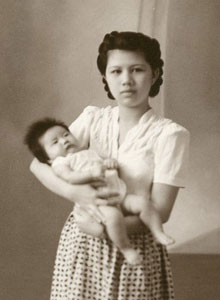
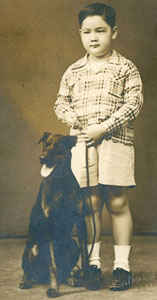
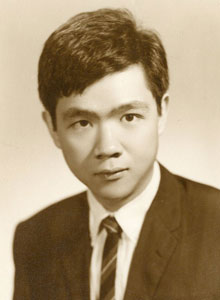
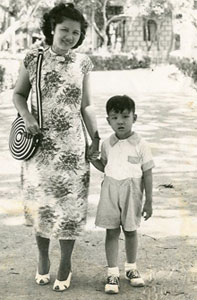



All the world's a stage, and all the men and women merely players… One man in his time plays many parts, his acts being seven ages. At first the infant, mewling and puking in the nurse's arms.  And then the whining school-boy… the lover,  sighing… a soldier, full of strange oaths… the justice, in fair round belly… The sixth age shifts into… the pantaloon, with spectacles on nose and pouch on side… Last scene of all, that ends this strange eventful history, is second childishness and mere oblivion: sans teeth, sans eyes, sans taste, sans everything."  — Shakespeare


Welcome to my world!

Paul August 19th, 2009

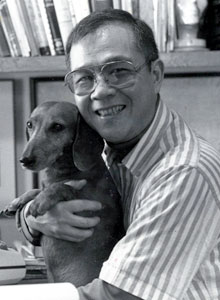
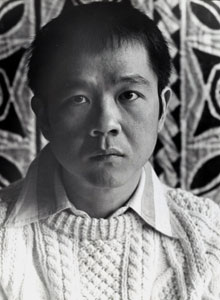
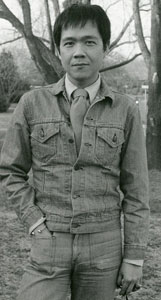
Although I’m calling this new website “a personal memoir in flux,” it is also my hope that the various sections will be of interest to people, whether they know me or not. “Out on a Lim” shares short observations on day-to-day life. “Limerances” chronicles longer remembrances of things past. “Limoscenes” presents descriptions of the plays I’ve written to date, with production photos. “Images in Limbo” shows pictures of the aging process, of me with family and friends. “Limpets” are the non-human dogs in my life, and “Limitations” are tributes to people who are no longer with us. So here I am, past imperfect, present progressive, future tense. Let me know what you think.

10 March 2010: “Thy rod and thy staff…”

Paul March 10th, 2010

Former Representative Eric J. Massa of New York admits that he groped several male aides inappropriately in his office, grabbed another male staff member’s member at a wedding party, and tickled yet another male underling “until he couldn’t breathe,” but that there was “nothing sexual” about these close encounters of the gay kind.  What surprises me is that Massa has not quoted Psalm 23 in his own defense:  “Thy rod and thy staff, they comfort me.”

My Kurt Vonnegut Story

Paul March 9th, 2010

Like many of my peers, when I was in college forty years ago, one of the writers whom we all admired was Kurt Vonnegut (1922-2007).  I never thought I would actually meet the man but, during one of my trips to New York, meet him I did, sort of, and this is what happened. 

It was a Saturday afternoon, sometime in the early 1980s.  I don’t remember what play it was we had been seeing, or which theater on Broadway we were in, but during the intermission at that particular matinee performance, we were all mingling in the lobby, and there he was, standing right next to me, towering over me, a shaggy bear of a man—looking like something the cat might have cradled and then dragged in from the monkeyhouse—the great man himself, Kurt Vonnegut! 

I was still drinking in the power and the glory of the man when I saw two teenage girls coming up to him, shyly but bravely asking him for his autograph.  We all tried not to eavesdrop as the man cleared his throat, paused dramatically, and then spoke in a voice loud enough for everyone to hear.  “I’m sorry,” he said gruffly, looking at his watch, “but I never sign autographs at 3:30 on Saturday afternoons.” 

The champion could have had all of us for breakfast, and he did. The two girls shrank and turned to me in confusion, because I just happened to be standing next to the man.  ”Sir,” they asked me haltingly, trying to cover their embarrassment, not knowing whether or not to ask me for my autograph, ”are you anyone?”

“No,” I mumbled apologetically, fleeing from the scene, back to the safety of my seat inside the theater.  During the entire second act of the play, I thought of all the things I might have said to console the two girls but didn’t, to cut the great man down to size but didn’t; and I hated myself for not being quick-witted enough, for having been in awe of a hero, for wanting the same thing those two girls wanted, the man’s autograph. 

In the introduction to BAGOMBO SNUFF BOX, Kurt Vonnegut lists eight cardinal rules for anyone wishing to write short fiction.  Here’s Rule #6:  “Be a sadist.  No matter how sweet and innocent your leading characters, make awful things happen to them—in order that the reader may see what they are made of.” 

Perhaps, back in the lobby of that theater in New York, at 3:30 on that particular Saturday afternoon in the early 1980s, Kurt Vonnegut was being deliberately sadistic, leading his young fans into that familiar slaughterhouse, teaching us all a lesson in life, liberty and the pursuit of celebrities.

My Robert Anderson Story

Paul March 8th, 2010

Robert Anderson died of pneumonia at his home in Manhattan on February 9, 2009.  Because the 91-year-old playwright had also been suffering from Alzheimer’s disease for seven years prior to his death, I feel compelled, now more than ever, to share a personal anecdote about him before it too slips from my memory.

Years ago, when I was a teenager in Manila, my friends and I saw TEA AND SYMPATHY, a movie based on the play by Robert Anderson, featuring Deborah Kerr as a sympathetic older woman who’s running a dormitory in a boys’ school in New England, and John Kerr as one of the “sensitive” boys in the dorm.  At the end of the movie, because she feels sorry for the boy after he is suspected of having homosexual tendencies, Deborah Kerr goes into the boy’s bedroom and decides to help him disprove what doubts he might have about his own sexuality. She sits on his bed, begins to unbutton her blouse, takes his hands and guides them towards her opened blouse, and utters a line full of enigmatic pauses as the movie ends. 

My friends and I argued heatedly about those enigmatic pauses, so we found a copy of the script.  In the published text of the play on which the movie was based, this is how the line appears:  “Years from now—when you talk about this—and you will—be kind.”  My friends and I continued to argue about the interpretation of those pauses.  Some thought she was gently asking him to forgive her in the future for what she’s doing now:  “Years from now, when you talk about this, at that time, I beg you to please be kind.”  Others thought she was being completely realistic, and that the line ought to be read sardonically:  “Years from now, when you talk about this, and I have no doubt that you WILL talk and boast about this, when this happens, please try to be kind.”

And so, back in 1960, I took it upon myself to write Robert Anderson, care of his publisher in New York, to ask him which of these two interpretation he had intended when he wrote the line.  I never really expected to hear from him but, weeks later—lo and behold!—he wrote me back.  Although I no longer have the letter, even now, I remember how Robert Anderson settled our argument fifty years ago.  “Both interpretations are correct,” he wrote. “If you thought I intended it, then I must have.” 

In the early 1980s, when I actually met Robert Anderson at a function sponsored by the Dramatists Guild in New York, I told him this story.  His eyes lit up and he said, “Yes, I remember that letter from the Philippines.” 

I was astonished.  “You do?  Seriously, you do?” 

“Yes, of course.  It’s not everyday I get such intelligent letters, and from fans so young, in the Philippines!”

Another decade later, when I saw Robert Anderson again, in 1994, at the William Inge Festival in Independence, KS, it was he who came up to me this time, and reminded me about that letter which I had written him all those years ago.  It was kind of him to remember, and it now makes me sad that these sort of memories were being erased from his remarkable mind the last seven years of his life. 

It is my hope that, years from now—when my own time comes, if anyone talks about me—and they will—be kind.

2 March 2010: Relief Fatigue

Paul March 2nd, 2010

First, New Orleans.  Then Haiti.  And now Chile.  How much more can a modern-day Job take?  How much more can a modern-day Job give?  The spirit is willing, but our own economy is weak.  It’s hard to turn off the news about disasters abroad, but what about ongoing daily disasters at home, if you’ve still got one?  How do you spell Relief?  Jobs, Jobs, Jobs.

25 February 2010: Sarah Palin’s Curiosity Case

Paul February 25th, 2010

According to former Florida Gov. Jeb Bush in a recent interview with Newsmax, former Alaska Gov. Sarah Palin lacks ”the depth of understanding of the complexity of life that we’re living in today.”  He also thinks that she has no political legs in 2012 because “public leaders need to have intellectual curiosity.”  I beg to differ with the thoughtful Bush on the latter point.  In my opinion, Sarah Palin is herself the biggest curiosity of all, intellectual or otherwise, that we’ve ever encountered in politics in this country.  As to whether or not she has legs, not being into dismemberment issues, I must admit I’m stumped.

24 February 2010: “Makin’ Whoopee” with Bristol Palin

Paul February 24th, 2010

Not to be outdone by her erstwhile partner in sin, who has now been seen suavely clothed in TV talkshows and hirsutely unclothed in Playgirl magazine, Bristol Palin has agreed to appear as herself on the ABC Family drama series “The Secret Life of the American Teenager.”  The 19-year-old daughter of Sarah Palin will be featured in an episode dealing with the consequences of condomless fornication and teen pregnancy.  Since Bristol did not get famously pregnant all by her lonesome self, inquiring minds want to know if we’ll get to see her “Makin’ Whoopee” with Levi Johnston.  To boost ratings, ABC Family should change the title of the show from “The Secret Life of the American Teenager” to “The Secretions of the American Teenager.”  Reality TV doesn’t get better than this.  It isn’t porno, it’s Sex Education.

11 February 2010: Teabagging with a Gay Lord!

Paul February 11th, 2010

If Sarah Palin wants to enrich herself further after all the lucrative book tours and speaking engagements run out, she can always set up shop as a folksy fortune teller.  She doesn’t have to read the palms of her religious Republican followers, because she can just read her own.  Her slogan can be, “With Sister Sarah, every day is Palm Sunday.”   And for extra donations, she can also read the tea leaves of all the fervent and devout teabaggers.  I’m surprised she didn’t do this last week in Nashville, when she was the keynote speaker at the first National Tea Party Convention.  By the way, did anyone else but me notice that the convention was held at the Gaylord Opryland Hotel, and that all the TV cameras showed the speakers preaching behind a Gaylord podium?  Gay Lord?  Really?  Why weren’t all the people at the convention on their knees, worshipping their Gay Lord?

28 January 2010: Please Ask, Please Tell.

Paul January 28th, 2010

“…one nation under God, indivisible, with liberty and justice for all.”   I’d like to believe that these words are not just empty rhetoric, that they will lead directly to action, and soon.  What’s the state of our union when we deliberately exclude, ostracize and discard some members of The American Family?

16 January 2010: Beware of Professors!

Paul January 16th, 2010

Having spent nearly forty years of my life teaching in classrooms at the University of Kansas and elsewhere, it puzzles me that, on the one hand, Americans in general seem to believe in the virtues of a good education but, on the other hand, they ultimately also seem to distrust their teachers.

Barack Obama was a professor.  He taught constitutional law at the University of Chicago Law School from 1992 to 2004.  He was depicted by the media as the epitome of “cool” and “hip” on the campaign trail, through the inauguration, and through his first 100 days in the White House. But then, inevitably, the tides turned.  Now the same pundits are saying that Obama is much “too cool” and “aloof.”  Why does he seize every opportunity to give us “teachable moments” as though we’re still in school?  He’s just “too professorial.”

Is there something really intrinsically wrong or untrustworthy about our teachers and professors?  If so, let’s stop sending our kids to school, stop taking out student loans to go to college, stop funding universities and all higher institutions of learning.  We don’t really need a president who is “too professorial” and makes us feel stupid.  What we really want is a folksy leader whom we can chew tobacco and go to church with, hunt abortionists and four-legged animals with, go bowling or balling with, have a beer with.

Now is the time for the Republican Party to inherit the “cool” factor.  They should get “with it” and start wooing all the women and other marginalized voters in this country by bringing back George W. Bush and Dick Cheney in drag.  If “ignorance is bliss,” then who better to lead us in 2012 than faux females like Sarah Palin and Liz Cheney?  Who wouldn’t want to have a drink with these two charming Airheads of State? Well, perhaps not a beer.  Maybe an aperitif, or is that too European, too socialist, too liberal, too elitist, too professorial? Well, then, maybe a Screwdriver.  At least the orange juice will provide some healthy Vitamin C while we’re getting screwed into alcoholic oblivion.

13 January 2010: How Dark Is Light?

Paul January 13th, 2010

In her autobiography Thursday’s Child, Eartha Kitt talks about growing up in the cotton plantations of South Carolina in the late 1920s and early 1930s, and how she was ostracized by blacks and whites alike because her lighter skin color made her neither black nor white.  So how did she go on to become a great celebrity not just in nightclubs and recording studios, but also in theatre, movies and television?  In 1950, Orson Welles called her “the most exciting woman in the world,” and cast her as Helen of Troy in his production of Dr. Faustus. 

Given the recent controversy over Senate Majority Leader Harry Reid’s remark about the game-changing likelihood of white Americans voting for a “light-skinned” African-American in the 2008 presidential election,  I’ve compiled a partial list of African-Americans in Hollywood movies.  I’m presenting them not chronologically but alphabetically, making it harder perhaps to see if in fact there is any kind of  pattern or commonality in the pigmentation of black screen faces through the decades.

Here are the black women whose images flickered in our minds—Angela Bassett, Halle Berry, Diahann Carroll, Dorothy Dandridge, Ruby Dee, Whoopi Goldberg, Pam Grier, Lena Horne, Eartha Kitt, Queen Latifah, Butterfly McQueen, Mo’Nique, Juanita Moore, Beah Richards, Diana Ross, Anna Deavere Smith, Cicely Tyson, Ethel Waters, Vanessa Williams, Oprah Winfrey.

And the black men whose names on the marquee brought us into the movie houses—Harry Belafonte, Bill Cosby, Sammy Davis Jr., Laurence Fishburne, Jamie Foxx, Morgan Freeman, Cuba Gooding Jr., Louis Gossett Jr., Dick Gregory, James Earl Jones, Spike Lee, Eddie Murphy, Sydney Poitier, Chris Rock, Howard Rollins, Will Smith, Denzel Washington, Forest Whitaker, Paul Winfield. 

And then, of course, there’s Michael Jackson, in a sad class by himself, someone whose pigmentation changed with his every public appearance. 

Leaving Hollywood and the world of make-believe behind, how about the real world?  Do we have a different set of criteria for the pigmentation of blacks in sports, in academia, in politics?  As the nation gets ready to celebrate Martin Luther King Day next Monday, I find myself wondering—If MLK had been born decades later, with the same darker skin and the same oratorical skills, would we have elected him President of these United States?  And would all the “tea-baggers” and right-wing Republicans crucify the “dark-skinned” King even more than the way they’ve been crucifying the ”light-skinned” Obama? 

Maybe Harry Reid was wrong.  Maybe we aren’t ready.  Maybe Hollywood needs to pave the way some more.  Maybe Quentin Tarantino needs to remake Gone with the Wind with Kanye West playing Rhett to Mo’Nique’s Scarlett and, maybe this time, quite frankly, my dear, we ought to give a damn.

Next »